We open this podcast and close our season with this thought from our co-host Carol Jenkins:
We’re talking about poverty, democracy, race, and the unfinished promises America keeps making to itself.
Co-host David introduces our first guest, Adam Green. He’s an associate professor at the University of Chicago. HIs academic career focuses on black political and cultural history. As part of his work, he wrote the introduction to a memoir that we nearly lost: We Called It a War: Lessons Learned from the Fight to End Poverty.
The Sargent Shriver Peace Institute says this about the book: “Written in the 1960s and rediscovered in the Sargent Shriver Peace Institute archives, the memoir has been edited and annotated by Shriver’s friend and colleague, David E. Birenbaum, Esq., and a new introduction has been written with some additional annotations by Professor Adam Green of the University of Chicago.”
Adam says bringing this book to print was done to help further the conversation around someone who was an important architect of the ways this country could imagine working on the problem of poverty.
The manuscript was originally written as a series of interviews based on Shriver’s experiences after leaving the Organization in Economic Opportunity, which was the administrative arm of the federal government dedicated to the War on Poverty in the 1960s.
Although this book was intentionally not published when it was written due to Shriver’s political and career interests, Green says today might be the best time for it.
There’s a different constituency of people who are actually eager to learn from what was attempted during the War on Poverty.
A large portion of Sargent Shriver’s work was dedicated to bringing those invisible Americans into the calculus about intelligent and sustainable public policy. Who better to be enfranchised to participate in these processes and help us determine the ways in which the current laws are not adequate?
Did you know? Programs started as part of the War on Poverty still exist today.
Shriver advocated for the idea that we as a society can do a better job of investing the resources that we do have to enrich and equalize the lives of those living in poverty. The truth is, poverty is a choice made by one policy after another, but we could transform and optimize our society.
Green leaves us with this: We need to make sure that we’re making credible gestures and credible commitments to the young people in our country so that we can design a future together.
Our last guest of the season is friend of the podcast Kate Breslin, president and CEO of the Schuyler Center.
She gives us an update on the (late) New York budget and what the Schuyler Center is working toward and hoping to see.
These steps would be critical to the Child Poverty Reduction Act, which is aimed at reducing child poverty in New York by half before 2031. They also discuss another way to reduce poverty: child tax credits. New York has increased the amount of the credit and not requiring a Social Security Number to receive the credit.
Breslin also discusses the legacy of the Schuyler Center, which has been providing assistance to disenfranchised people for 155 years. Breslin says she thinks most people would be surprised by how many children and families live in poverty. This is because it is very easy to not see them; this is why we call them the invisible Americans.
Coming soon.
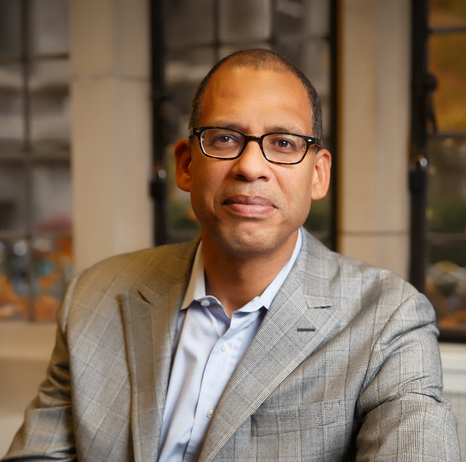
Author and Associate Professor
Adam Green is a long-time collaborator of the Sargent Shriver Peace Institute. He appeared in the documentary about Sargent Shriver, American Idealist: The Story of Sargent Shriver, and contributed to the planning and proposal of the Sargent Shriver Fellows Program at the University of Chicago Institute of Politics. Adam is currently leading the efforts to edit and annotate the forthcoming memoir by Sargent Shriver, We Called It a War. The memoir outlines Sargent Shriver’s efforts to lead the War on Poverty. Adam’s academic home is the University of Chicago, where he is Associate Professor in the departments of History and of Race, Diaspora, and Indigeneity. His field specialties include modern US history; African American history; urban history; comparative racial politics; and cultural economy. He is also a Faculty Affiliate at the Center for the Study of Race, Politics, and Culture; a Faculty Board Member at the Karla Scherer Center for the Study of American Culture; and a Senior Fellow at the Society of Fellows in the Liberal Arts at the College.
Adam is the author of Selling the Race: Culture, Community and Black Chicago, 1940-1955 and co-editor of Time Longer Than Rope: A Century of African American Activism. He has lectured on campuses and at community venues, appeared in multiple film documentaries, and on WTTW (PBS) Chicago, WBEZ Chicago (radio), Al-Jazeera, BBC (radio) and C-SPAN. He has been involved in community-based initiatives in New York, Chicago, and Los Angeles related to police accountability and educational justice.
Adam is also currently involved in a Columbia University project to create the official oral history of the Obama presidency.
President & CEO of the Schuyler Center for Analysis and Advocacy (SCAA)
With Kate’s leadership, Schuyler Center is building upon its 150-year legacy as a strong, independent voice and coalition-builder. Schuyler Center holds government accountable and helps to shape public debate around policies that affect New Yorkers, with a particular focus on people and communities experiencing poverty and inequity. Kate has spent her career analyzing and advocating in support of thoughtful policy solutions that improve the lives of people in the U.S. and abroad. With Kate at the helm, Schuyler Center led the initiative resulting in New York’s Child Poverty Reduction Act, signed into law in December 2021. Kate plays a leadership role in several statewide coalitions, including Medicaid Matters NY, and she is frequently invited to lead and participate in policy-focused initiatives and workgroups. Previously, Kate served as the Director of Policy for New York’s primary care association, CHCANYS, directing initiatives to improve health care access in underserved communities. While in California, she was Project Director for the California Budget Project, analyzing state budget and tax policies, and has also served county government. Kate has led and worked in relief and development projects in several African nations, including serving as a Peace Corps Volunteer in Sierra Leone. Kate holds Masters Degrees in both Public Health and City and Regional Planning.

The Invisible Americans Podcast, Inc is incorporated as a 501(c)(3) non-profit organization.
More information at the Charities Bureau Registry.


